May 30, 2026
If It's True
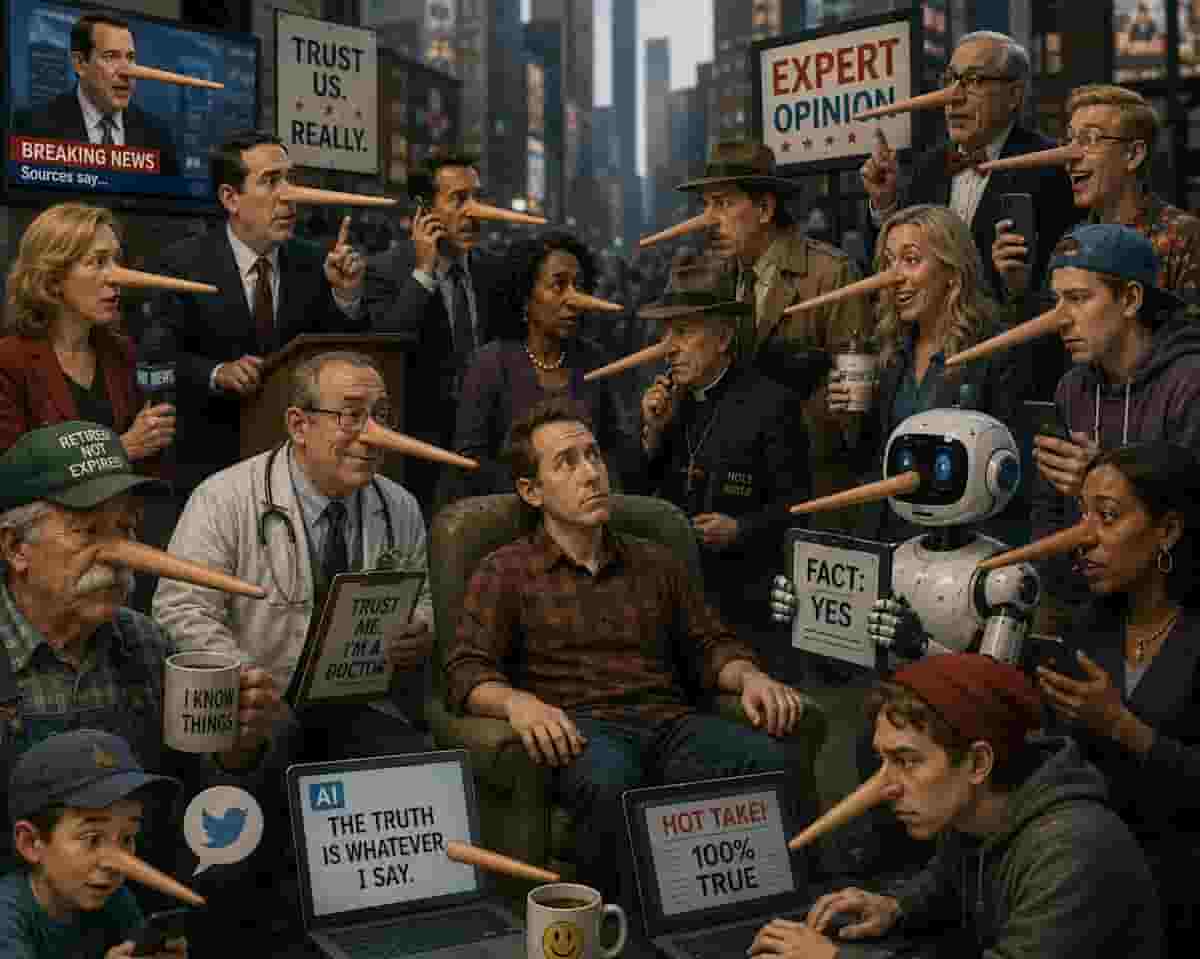
Jack Nicholson is well known for the classic line, "You can't handle the truth!" As Colonel Nathan R. Jessep, his philosophy was that only individuals who had his moral superiority, duty and background were appropriate purveyors of the world's realities. Others beneath him should get only the information that he deemed was good for them.
The story is fictional, to some degree, but the Colonel's logic begins to explain why so many of the conversations in our house these days sound like this, "I read the other day that…" Before my wife or I can even finish the sentence, the other one will say, "If it's true."
This exchange has become so common between the two of us that it barely even registers anymore. In fact, there are times now when one of us will finish the conversation for the other before the closing words can even be uttered. It's become almost automatic.
And there's good reason for it. We live in a time when most things feel suspect. Headlines are slanted. Video clips are selectively edited. Social media spreads rumors at lightning speed. Artificial intelligence can now create realistic images and voices that never actually existed. Institutions that people once trusted without much hesitation are now viewed with suspicion by most all of us. Colonel Jessep's philosophy is quite popular these days.
So, when one of us hears a claim from almost anywhere today, the reflex response increasingly becomes: "If it's true."
Our skepticism is understandable. Discernment matters, and Christians aren't called to be gullible people who blindly believe everything they see or hear. But I've begun wondering lately whether living in a world of constant suspicion may also be shaping us in ways we don't fully understand--or want.
Many of us have become so skilled at defending ourselves from being wrong we've also become resistant to being changed. That's a dangerous shift.
Our basic defenses seem useful—even necessary. We learn to protect ourselves from deception, manipulation, embarrassment, and foolishness. We become more cautious about what we accept, while also becoming more skeptical of others' motives. But eventually those same habits can quietly seep into our spiritual lives as well.
When Scripture confronts something in us we don't want to surrender, how often do we instinctively begin by building counterarguments? How quickly do we explain away conviction, justify our behavior, minimize uncomfortable truths, or reinterpret difficult passages into something less personally costly?
Another popular tool available to us is where we attack the source itself. When confronted by truths we dislike, we may respond with "That preacher is hypocritical….That church isn't perfect…or Christians are flawed." And to be fair, sometimes the observations can even be true. Human messengers aren't perfect. Churches do fail people at times. And Christians can absolutely behave poorly. But flawed messengers can still carry true messages.
The deeper issue is whether our hearts remain open enough before God that truth can still penetrate the defensive shells we've built for ourselves. Teresa of Ávila once wrote, "Humility is walking in truth." Defensive hearts struggle to do that because truth often threatens the versions of ourselves we've worked so hard to protect.
And the frightening thing about our shells is that they often start out as protection. But after enough disappointment, embarrassment, betrayal, or confusion, the armor feels necessary. Unfortunately, armor that protects the heart can also isolate it from correction.
The Bible repeatedly warns about hardness of heart. I used to think that phrase referred primarily to open rejection of God. But I'm no longer sure that's always how hardness begins. Sometimes it may look far more ordinary—less like shaking our fist at heaven and more like immediately defending ourselves when conviction arrives. A sermon becomes about others in the audience. A difficult Scripture gets quietly sidestepped. A spouse's observation is met with instant justification rather than reflection. What if hardness of heart is quietly developing when we become experts at defending ourselves from correction?
In the Garden of Eden, the serpent's first attack wasn't directly on Eve's behavior. It was on trust. "Did God really say…? (Genesis 3:1)" With just a few words, suspicion entered the conversation. Doubt about God's words slowly became doubt about God's motives and eventually doubt about God's character itself. "Nothing is new under the sun... (Ecclesiastes 1:9). Solomon was right.
Today, many of us live surrounded by so much confusion and mistrust that suspicion has become our default posture toward almost everything. But followers of Christ can't allow that posture to become the lens through which we ultimately evaluate God and His Word.
We all filter truth through some kind of lens: politics, culture, personal experience, fear, tribe, emotion, self-interest...the list is a long one. However, our Christian calling to be set apart means we're supposed to be different. As we grow spiritually, God's Word is meant to become the lens through which we evaluate everything else—not the other way around.
Holiness requires more than simply believing God exists or agreeing that the Bible is true. Holiness involves remaining soft enough before God that His truth can still correct us, reshape us, and change us.
That kind of openness increasingly sets a person apart in a world where defensiveness and suspicion have become second nature. It's a higher standard for sure.
Perhaps that's why the writer of Hebrews warned believers so carefully: "See to it, brothers and sisters, that none of you has a sinful, unbelieving heart that turns away from the living God… so that none of you may be hardened by sin's deceitfulness." (Hebrews 3:12–13)
The greatest danger may not be believing something false. It may instead be becoming so guarded that truth itself no longer reaches us.