April 5, 2026
Brace Yourself
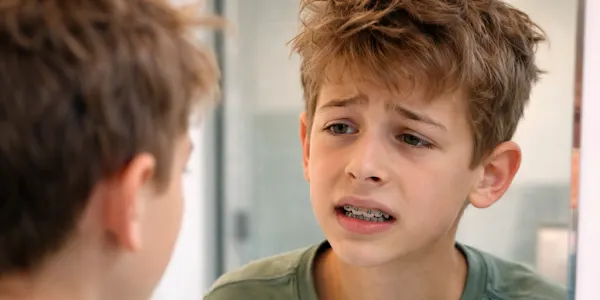
When I was in sixth grade, my parents explained to me that I needed braces.
I didn't fully understand what that meant. I knew it involved going to someone called an orthodontist an hour away once a month, missing a half day of school each time, and riding with a couple of friends to the appointments. That part sounded pretty cool. I was "in."
What I didn't understand was the process itself. I had too many teeth for the size of my mouth, and the ones that were there looked more like a group of kids hopped up on sugar than a group of soldiers standing in formation at attention. Someone wiser than me knew something needed to be done, even if I didn't fully grasp it at the time.
The day the braces went on wasn't particularly memorable. The days that followed were.
After each monthly adjustment, there were a few days of pressure and soreness. Not sharp, overwhelming pain, but a steady, persistent discomfort that made even simple things—like eating—feel different. And just as it would begin to fade, it would be time to go back and have them tightened all over again.
At first, I didn't fully grasp what was happening or what the end goal was to be. Why make things hurt again just when they were beginning to feel better? And my smile with the braces? Let's just say I wasn't lighting up any room with my smile in those days.
Over time, though, things did begin to improve. I didn't notice it day to day, but gradually I could see some visible progress. The pressure was doing something. The adjustments, as uncomfortable as they were, weren't random. They were moving things—slowly, deliberately—toward a result that was beginning to make sense as to a final goal.
Looking back, of course, it's much easier to see what was happening. There had been a plan from the outset. Someone with knowledge I didn't have could see what needed to be corrected and knew how to apply the right kind of pressure, at the right time, in the right places. The pain and discomfort wasn't the goal. It was part of the process.
And I wasn't in control of any of it. The only thing mine to decide was whether I would cooperate with the process—or resist it.
Of course, you can already see where all of this is going. Much of what shapes us most in life doesn't happen all at once, and it doesn't necessarily look like any major life event. No, it happens gradually, often through experiences we wouldn't have chosen and, at times, would have preferred to avoid altogether. Seasons of pressure. Periods of discomfort. Adjustments that come just when things were beginning to feel manageable again.
And like those visits to the orthodontist, it can be difficult to understand why. Why me? Why now?
The writer of Hebrews speaks to this directly. "No discipline seems pleasant at the time, but painful. Later on, however, it produces a harvest of righteousness and peace for those who have been trained by it" (12:11).
What we often fail to see in the moment is that the process isn't random. There's an intention behind it.
God, who, of course, sees clearly even when we don't, isn't simply removing discomfort from our lives. He's shaping something within us and realigning areas that have drifted over time. We tend to be impatient and, of course, prefer having control ourselves. We rely on self rather than Him. Left to our own devices, these patterns don't correct themselves. They settle in while quietly limiting who we're capable of becoming.
But God doesn't leave us there. In His care, there's both patience and precision. He applies pressure where it's needed and allows space for change to take hold. And while we may not always understand the timing or the method, we can trust the One who's guiding the process.
Tim Keller once wrote, "God will only give you what you would have asked for if you knew everything He knows."
That kind of trust doesn't come naturally. It requires us to believe that the One applying the pressure sees something we don't—that He's working toward an outcome we would choose if we understood it fully. Because, like those braces, the goal isn't the discomfort. It's creating alignment between the right things within us.
Looking back, so many times over those two years, all I wanted was for the soreness (and the metal mouth smile) to go away. And in those moments, it was hard to grasp that anything good could ever come from it.
But looking back, I'm grateful for those adjustments. Because without the pressure, nothing would have moved. And without the movement, nothing would have changed and I'd have remained like I was before the improvements.
The discomfort I wanted removed was, in many ways, the very thing that was making me better.