December 19, 2025
Playing Our Roles
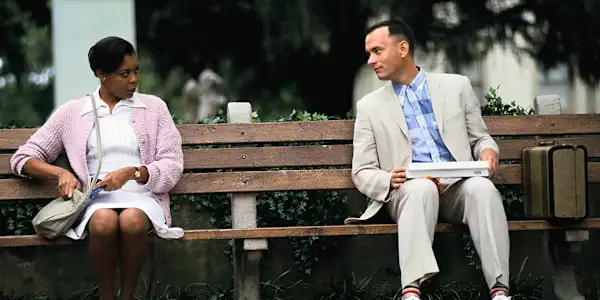
I recently listened to actor Gary Sinise reflecting on his role as Lieutenant Dan in the 1994 movie, Forrest Gump. What stood out to me wasn't any "big reveal" on the movie but something far more applicable to each of our lives.
Sinise explained that he had no real sense of the scope of the project he was part of while it was being filmed. He learned his lines, showed up, and played the role assigned to him. Almost all of his scenes were with the lead actor, Tom Hanks. Only briefly did he interact with a couple of other actors (Sally Field and Robin Wright Penn). That was it.
One source estimates that Sinise appeared on camera for only 15% of the movie, or about twenty-one minutes. Beyond that, he had little understanding of how the larger story was intended to unfold.
Once filming was completed—about a week before the public release—the director gathered the cast for a small, private screening. And WOW! Sinise said everything finally made sense. Sitting together and watching the entire story unfold, he saw how his individual scenes fit into something far greater than he had ever imagined. And Sinise wasn't the only one. He said they all looked at each other and smiled, realizing how good the movie was—and what they had each contributed through their individual efforts.
That observation stayed with me, because it feels remarkably applicable to how we go through life. We live almost exclusively through our scenes and our various interactions with a few others.
We see the moments directly in front of us—the roles we're asked to play at different points. We become aware of the responsibilities placed in our hands and of the people whose paths intersect with ours on any given day. What few of us can grasp is how our scenes are collectively helping to build the larger story.
Because of our limited views, many of us spend a surprising amount of energy asking the wrong questions. For example, "Do I really matter in the grand scheme of things?" A better—and far more freeing—question might be: "Am I being faithful in the scenes I've been given?" That shift in perspective can totally change a lot of things!
It moves us away from the pressure of having to understand the entire narrative and back toward the responsibilities we actually carry. We aren't asked to manage outcomes, orchestrate every connection, or comprehend how it will all turn out. We're asked to stay focused on our roles—to show up and do our best where we've been planted.
God doesn't hand us the full script with all our individual parts spelled out. We do, of course, receive the broad outline of the story He's telling. But each day, He gives us our scenes—relationships, situations, tasks—and invites us to live them with integrity, trust, and love. The why behind many of our assignments is rarely revealed in advance. More often, it's understood only in hindsight. We aren't being asked to carry the entire narrative. We just need to perform well where we've been placed.
For parents—or grandparents—that may mean being fully present in a season that feels repetitive or unseen. For leaders, it can mean making faithful decisions without knowing their long-term impact. For servants and believers, it often looks like doing ordinary work with no assurance that it will ever be recognized—or even noticed by someone else!
If each of us is living according to the purpose to which we've been called, faith allows us to trust that God—the Master Director—is managing everything else. His story doesn't depend on any one role and will ultimately unfold exactly as He intends. But when we neglect the scenes we've been given, it's not the story that suffers—it's us. We miss out on the many benefits that come from joining Him in the work He has invited us to share.
Scripture tells us that "now we see through a glass, darkly." That limitation isn't something to overcome; it's something to accept. One day, we'll have our screening. We'll finally understand how small acts of faithfulness were woven into something far greater than we could see while our scenes were playing out.
Until then, the invitation is simple.
• Show up and remain present • Do the work before you with care and integrity • Relinquish the need to understand how it all fits together • Trust that the story is unfolding exactly as it should (no matter our circumstances)
None of us gets a screening of the whole movie while we're here. But no scene is ever wasted in the hands of the Master Director. Sometimes, our most meaningful scenes aren't the ones that feel important at the time—they're the moments when we were faithful to where God placed us on the set.