November 16, 2025
The Goldilocks Trap
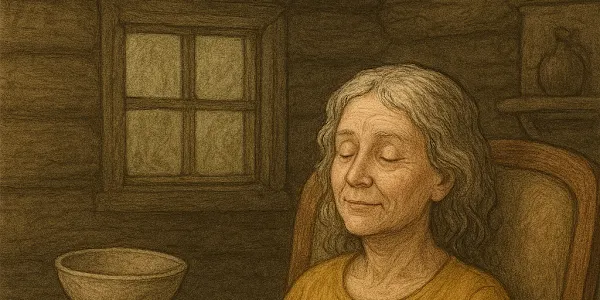
Where in your life have you settled for "just right" — and what would it look like to press on instead?
Most of us don't spend much time thinking about the dangers of becoming too successful in life. "Failure," of course, is a different story. Any of us would aspire to avoid that outcome.
We readily recognize "success" as something good to pursue and achieve. And most of us will spend years chasing it: a solid career, a decent house, a good family, a manageable routine — and, of course, a "comfortable" relationship with God. A life that, on the surface, looks like it works. And therein lies a problem.
A "good enough" mindset works just well enough that we stop pushing. Beyond some point, the pain that could motivate us to press forward feels greater than the discomfort we feel by sitting still. Our results are pleasant enough that we stop demanding more. And so, we settle into what could be called "optimal mediocrity"—where good enough is supposed to give us a happier, less stressful life.
Jim Collins famously stated, Good is the enemy of great. Of course, he was focused on organizational performance. But doesn't that also apply to people? Especially those of us in the second half of life.
By the time we hit our 60s or 70s on our personal odometers, we've got a lifetime of patterns hard-wired into us. Many of those patterns served us well enough to get us this far—or at least they didn't fail us outright. But that's not the same as thriving.
It seems at times like we're stuck in a kind of Goldilocks Trap—a place in life where things feel just right: not too hard, not too easy, not too risky, not too dull. We find a level of comfort that's predictable, familiar, and safe. We tell ourselves we've earned it—and maybe in some respects we have. But if we're not careful, comfort can quietly turn into captivity.
What begins as a goal to achieve balance can slowly have us sliding into stagnation. What starts as contentment slowly calcifies into complacency. We stop hungering for better because the temperature of life feels "just right."
That might even sound reasonable—until you realize that "just right" can lead to an above-average version of mediocrity. Some of you may have even seen the meme about imagined Greek philosopher Mediocrates, who would have said "Meh, good enough."
If we're people persons, we'll have plenty of company in that "just right" pool. Tim Ferriss has observed that it's lonely at the top because 99% of people are convinced they're incapable of achieving great things—so they aim for mediocrity instead.
We wonder why we're no longer growing. But often, the absence of growth and the absence of struggle go hand in hand. (I've resisted the urge to add yet another caterpillar-and-cocoon metaphor here. You're welcome.)
In the children's story, Goldilocks never explored beyond the bears' cabin. She stopped the moment she found something that felt comfortable enough. Great for fairy tales—but in real life, stopping at "comfortable enough" keeps us from the joy, purpose, and impact that only come from pushing further.
The Real Cost of 'Good Enough'. When we accept "good enough," we trade the possibility of something better for the comfort of something familiar. We avoid tough conversations because the relationship isn't that bad.
We skip workouts because we're not in that bad of shape.
We stay in routines that no longer stretch us because they still work—for now.
And slowly, life hardens—layer upon layer of dried paint slowly affixing us into place. It's rarely one big decision, but thousands of smaller ones, each a quiet concession to the status quo.
A Wake-Up Question. Try asking yourself this: If I could improve my life from being 80% good toward something closer to 100% outstanding just by increasing my personal effort, would I be willing to do the work?
Most of us say yes in the moment asked. But once we start examining our routines and daily decisions, we end up doing what we've always done. Some of us even muster the drive to try for a while—but when a few obstacles appear, we slip back to that comfortable 80%.
But what if that's precisely the problem? What if the greatest barrier to a richer, more meaningful life isn't failure—but moderate success?
The Invitation to More. Here's what I've come to believe: you don't have to be miserable to make a change. You just have to want better. We don't need to burn everything down to grow, but we do need to be brave enough to question what we've come to accept as good enough.
The path to better—whether in relationships, health, faith, or purpose—begins with the decision that "just right" isn't the finish line. It's simply the stage before what's still possible, if we're willing to keep pursuing it.
The Bible never calls us to a life of "just right." One of the strongest warnings against spiritual complacency comes in Revelation 3:15–16, where Jesus admonishes the church in Laodicea for being lukewarm—neither hot nor cold. He makes it clear how much he dislikes it if that is what we've become.
To me, that's the danger of the Goldilocks trap—lukewarm, comfortable, neither broken nor thriving. Not too much, not too little—just "good enough."
Paul points us toward a different mindset: "I press on toward the goal to win the prize for which God has called me heavenward in Christ Jesus." (Philippians 3:14)
Notice the verb—press on. That's not the language of coasting. That's the language of refusing to settle for good enough when God is still inviting us into growth, impact, and a deeper relationship with Him.
Goldilocks settled for "just right" because hers wasn't a journey of growth — she just wanted a place to eat and rest. A Buc-ee's in the woods, perhaps?
But we're made different. We're meant to keep moving, learning, stretching. And that's why the danger is greater for us: linger too long in "good enough," and it starts to feel like the destination instead of the detour.
God's call isn't to stay where it's comfortable—it's to keep pressing toward what's still possible.
Choose better this year! Be better. Press on.